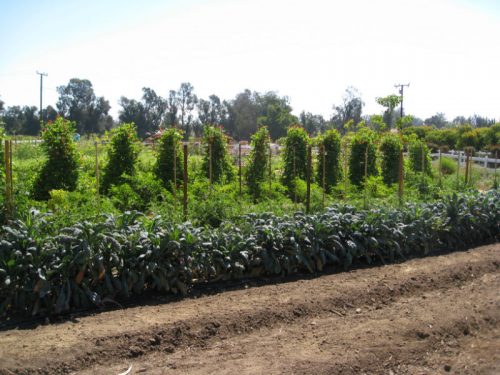
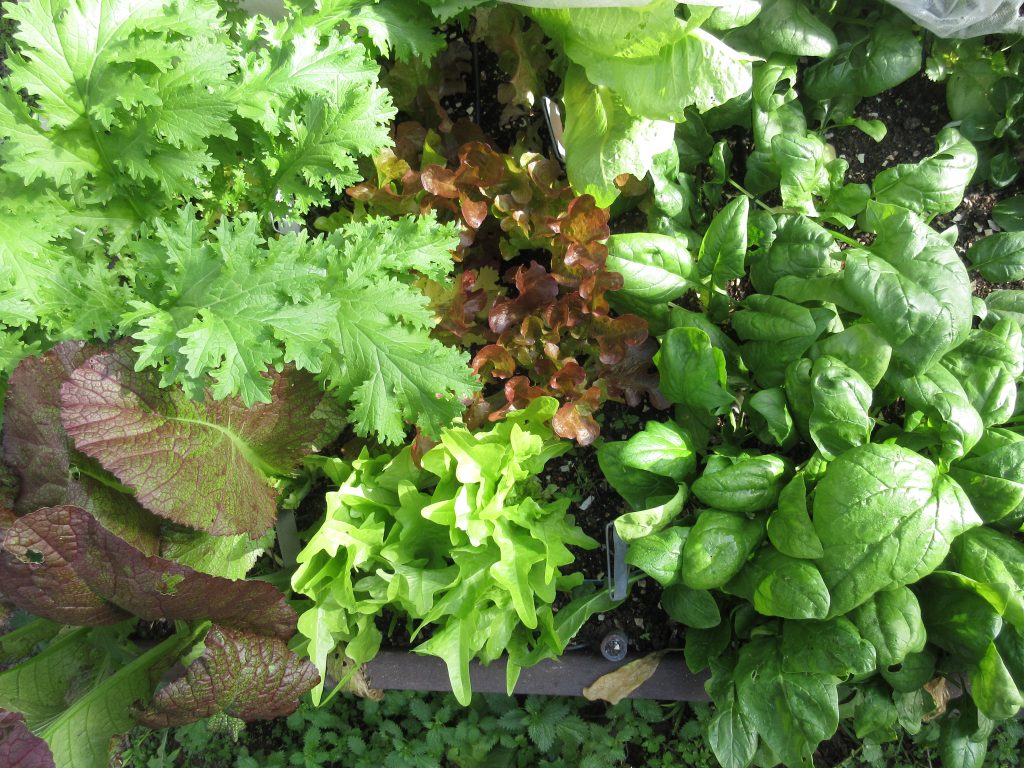
When we hear news about recalls and outbreaks like the recent cyclospora parasite, we’re grateful that we grow most of our salad greens at home here at Gardenerd HQ. But when contamination is not limited to one specific product, it’s harder to deal with, whether you grow your own food or not.
This time around, contaminated items including leafy greens, berries, and herbs. Here’s what you can do to protect yourself.
What is Cyclospora?
Cyclospora cayetanensis is an intestinal parasite that causes diarrhea and cramping that can last for weeks if it goes untreated. It arrives on our produce usually through exposure to contaminated water or waste products.
How does it get there?
As you probably know, sewage sludge / biosolids are common waste products used to fertilize conventional agricultural fields. Composted biosolids reach up to 131ºF but pathogens can survive at higher temperatures.
The parasite doesn’t pass from human to human, but this is a good time to remind everyone to wash your hands with soap before handling food. You can track where this parasite has been found in your state on this site.
How to Protect Yourself
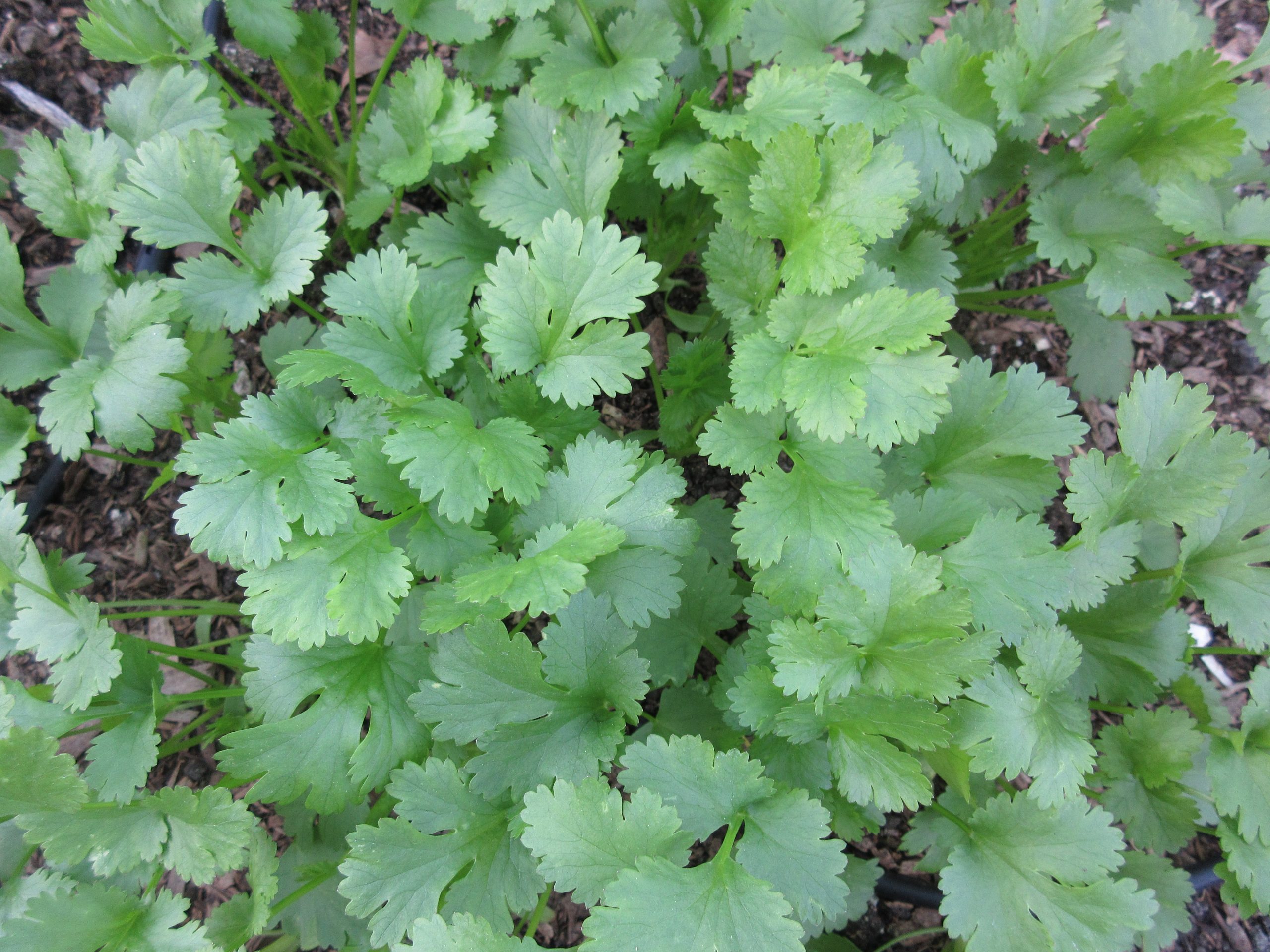
In the 2026 outbreak, the parasite has been linked specifically to raspberries, cilantro and basil, mixed lettuces, snow peas and green onions. The safety recommendations for dealing with parasite outbreaks that are broader than just one product recall include:
- Wash your produce before use – separate the leaves and use running water to rinse thoroughly
- Buy whole produce over bagged mixes. Whole heads of lettuce are less likely to be contaminated than bagged mixes of baby greens. Remove/discard the outer leaves
- Heat foods that can be heated to 158ºF before consuming or…
- Freezing berries reduces but doesn’t kill off the parasite
- Adding vinegar to your water doesn’t effectively remove the parasite, so you can skip that part
Of course, home-grown produce has not been linked to this outbreak, so now might be a good time to plan or plant these crops in your garden.

Stay safe out there, and practice good food safety measures to keep you and your family healthy. Grow berries, salad greens, herbs, and green onions at home to ensure safe and healthy food.